Should I Bid on My Own Name in Google Ads?
While it might seem crazy to bid on your company name, there are instances where it could prove beneficial. If you’re in a competitive market, a branded paid search strategy just might make sense.
Many businesses wonder whether it makes sense to pay money to show up highly in search engine results for their own name. For many, it seems counterintuitive (and almost unfair) that they’d have to use Pay Per Click money in order to show up first in Google when someone types the name of their business. “Why would I bother paying for my own name when I show up first organically no matter what?”
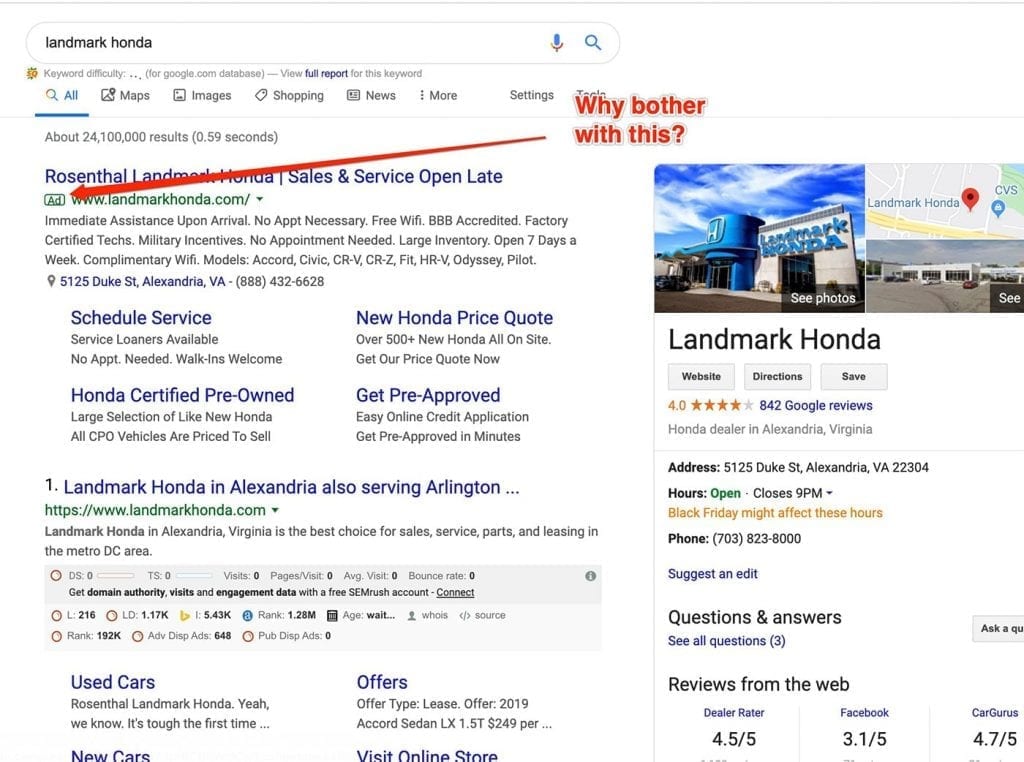
While this concept might seem a little backwards, there are many instances where this strategy might be necessary, and even highly profitable. Here are a few questions to ask yourself, to determine whether a “branded” paid search strategy makes sense for you.
Are competitors trying to steal my traffic?
If you’re in a highly competitive industry, then there’s a good chance your competitors are paying to show up in paid search results when someone searches your company name. For instance, this type of strategy runs rampant in the auto dealership business, where competing dealers in an area bid to show up for each others’ dealer name all the time.
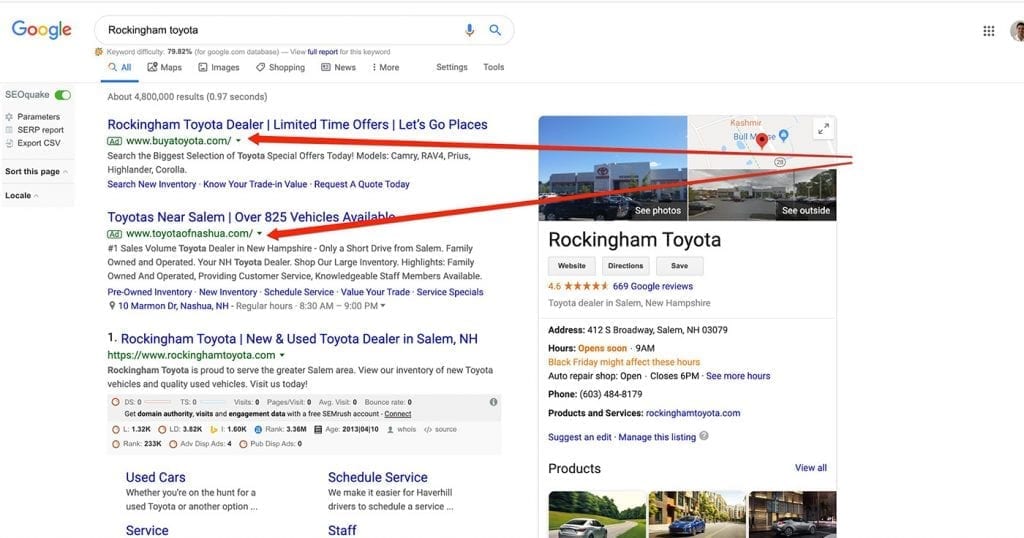
If this is happening to you, then it is likely beneficial to “defend your backyard” and bid on your own name. The reasons are many. First of all, if someone is Googling your name, then you’ve already paid to generate that customer with some other form of advertising (i.e. you ran a TV ad or a radio spot which inspired the searcher to look up your business).
It would be a shame to then lose that customer because a competitor picked your pocket. Also, it’s likely very cheap to bid on your own business name, since you’re technically the most relevant result for that particular search term and much of Google’s CPC (cost per click) calculation is based on a website’s relevance to the given term.
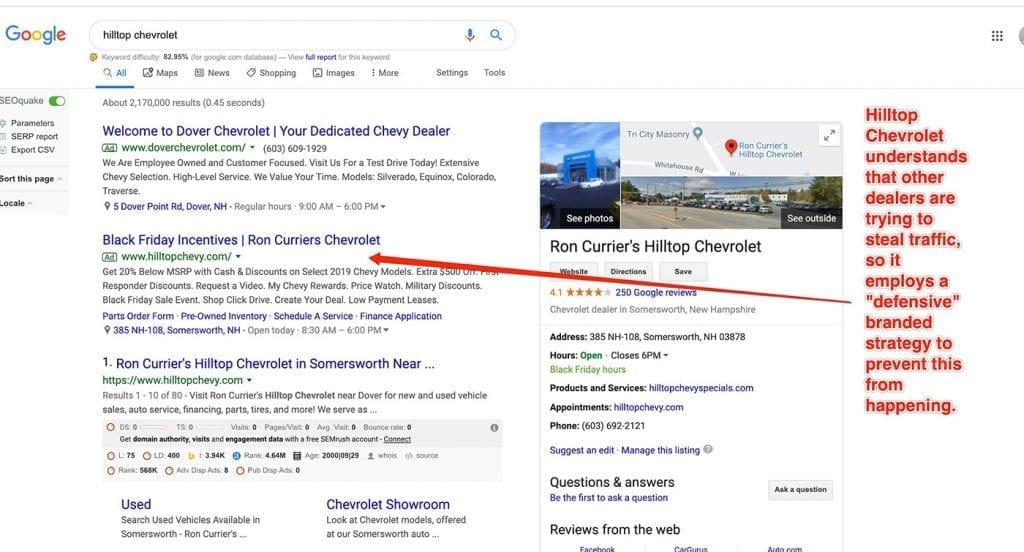
Your competitor’s CPC to buy a search for your name: $3.00. Your CPC to buy your own name: $.30.
Are 3rd party search engines bidding on my company name in order to capture traffic and sell it back to me?
The hotel industry is famous for this type of strategy, in which online travel agencies (OTAs) invest millions of dollars ot capture branded hotel traffic in order to undercut the hotel’s rates and then sell the bookings back at a 15-18% commission. Here’s roughly how it works:
Ted is looking for a hotel, and he’s heard that Westin in Boston is a great place to stay. Therefore, he Googles “westin boston” – and here’s what comes up:
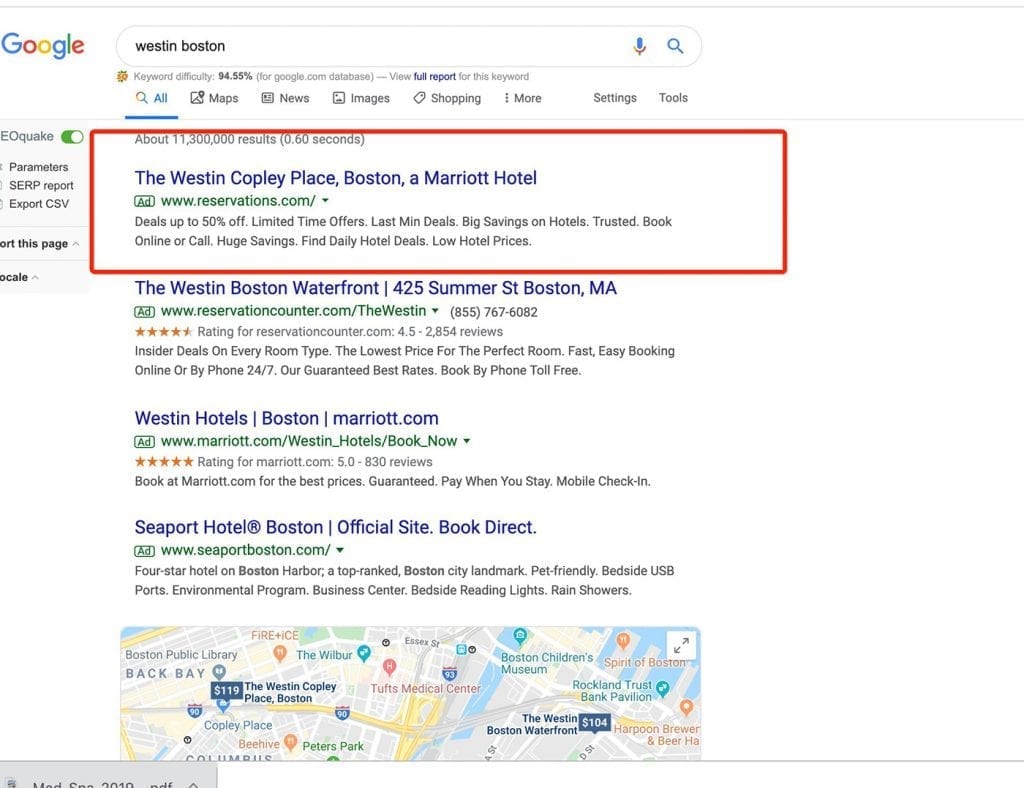
So without knowing any better (or caring, for that matter), Ted clicks the ‘reservations.com’ link and books his Westin room on that website.
Reservations.com then charges Westin a commission for this (typically 15-18% of the room fee). Westin (or Marriott) is clearly aware of this strategy, which is why the hotel bids on its own name and urges searchers to book at Marriott.com for the best price.
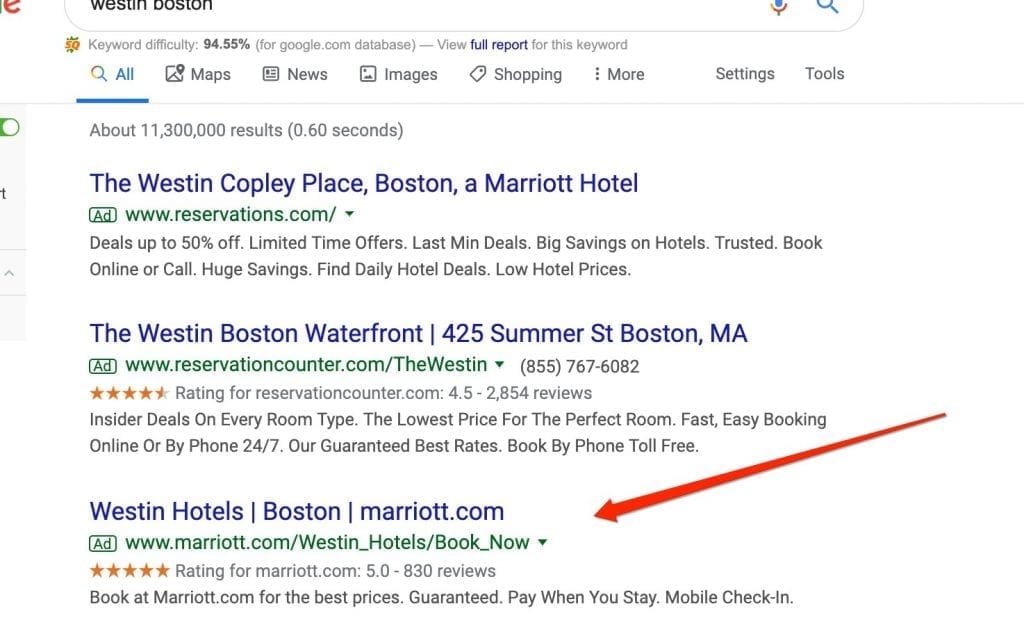
Marriott is attempting to execute a “branded paid search strategy” in order to avoid paying a hefty commission to reservations.com.
You might be wondering, “So how did reservations.com show up above marriott.com in Google search?” There are many reasons for this, including maximum cost per click bid, website authority, quality of the ad, total daily budget, and much more.
You might also be wondering, “If Weston doesn’t want to pay an 18% commission to Reservations.com, then why would they bother being on the website?” The answer is that, in some industries, it’s absolutely essential to be part of the 3rd party websites in order to maintain sales volume. But a strong “branded paid search strategy” is a great way to hedge your bet and have your cake while eating it too.
Do I want to appear more credible?
Paid search traffic tends to generate higher clicks from people with “commercial intent.” Therefore, many companies find it worthwhile to bid on their own company name so that they cover the paid search results as well as the organic results. A company with a paid strategy might appear more professional and credible to the average searcher.
Additionally, paid search listings can be much more customized than an organic listing. With a paid strategy, you can choose your exact landing pages, tracked phone numbers, exact ad copy to mirror the search term, and much more.