
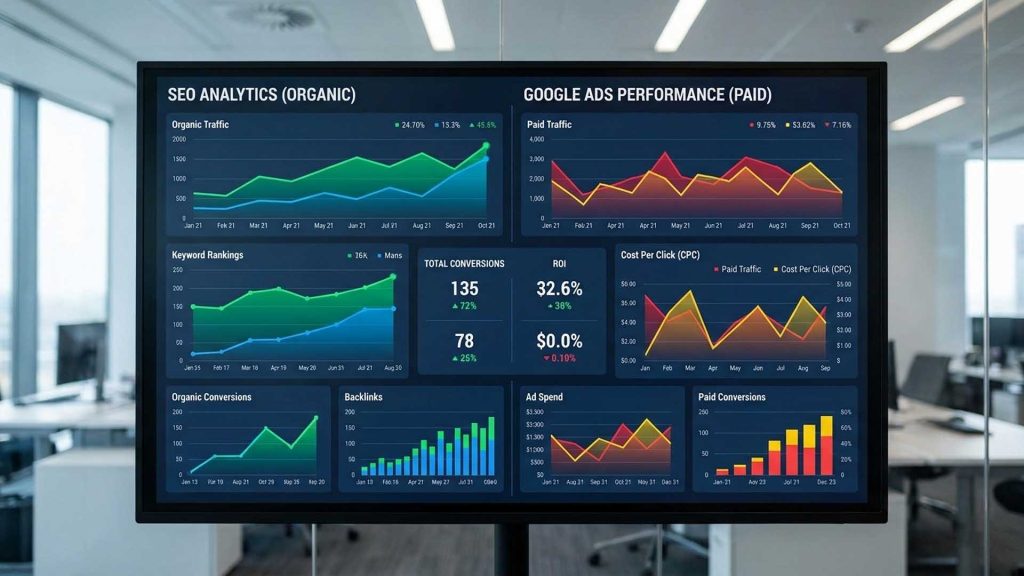
Many businesses view Google Ads and SEO as competing strategies. They often ask, “Should I invest in paid advertising or focus on organic search?” The truth is, the most successful businesses rarely choose one over the other. Google Ads and SEO each have unique strengths, and when used together, they create a marketing strategy that is stronger than either channel alone. Think of them as two pieces of the same puzzle. Google Ads delivers immediate visibility while SEO builds long-term authority. Together, they help your business reach more potential customers throughout every stage of the buying journey.
Google Ads Delivers Immediate Results
One of the biggest advantages of Google Ads is speed. Once your campaigns are live, your business can begin appearing in search results almost immediately. This makes Google Ads an excellent option for promoting new services, generating leads quickly, or increasing visibility during seasonal demand. Paid advertising also allows you to target specific keywords, locations, audiences, and demographics with precision. The downside is that traffic stops when your advertising budget stops. While Google Ads can generate fast results, it does not create lasting organic visibility on its own.
SEO Builds Long-Term Growth
SEO takes more time, but its benefits often last much longer. By optimizing your website, creating helpful content, improving technical performance, and earning authority over time, SEO helps your business rank naturally in search results. Unlike paid advertising, you do not pay every time someone clicks on an organic listing. As your rankings improve, your website continues attracting qualified traffic month after month. Many businesses find that SEO becomes one of their most valuable long-term marketing investments because it builds sustainable visibility.
Together They Increase Your Visibility
Appearing in both the paid and organic sections of Google’s search results gives your business more opportunities to capture attention. Instead of relying on a single listing, your company occupies more space on the search results page, making your brand more visible and recognizable. Even if a customer skips the sponsored result, they may click your organic listing. Others may do the opposite. Either way, your business has multiple chances to earn the click. Greater visibility often leads to increased brand awareness and more qualified website traffic.
Google Ads Can Improve Your SEO Strategy
Google Ads provides valuable data that can strengthen your SEO efforts. Because paid campaigns generate results quickly, you can identify which keywords drive the most conversions, which landing pages perform best, and which messaging resonates with potential customers. Those insights help guide future SEO decisions. For example, if a particular keyword consistently generates high-quality leads through Google Ads, it may be worth creating additional SEO content around that topic to increase your organic visibility as well. Using both strategies allows you to make smarter, data-driven marketing decisions.
SEO Supports Better Google Ads Performance
The relationship works both ways. Many of the improvements made for SEO also benefit your Google Ads campaigns. Faster page speeds, mobile-friendly design, clear navigation, high-quality content, and strong landing pages create a better user experience. Google rewards these improvements through higher Quality Scores, which can lower your cost per click and improve ad performance. When your website is built for both users and search engines, every marketing channel benefits.
Build a More Complete Marketing Strategy
Customers rarely discover businesses through a single interaction. Some click a paid ad the first time they search. Others find a blog article through organic search, return later through a Google Ad, and finally contact your business after reading reviews or visiting your website several times. Combining Google Ads and SEO allows you to connect with potential customers throughout that entire journey. While one strategy generates immediate opportunities, the other builds lasting authority and trust over time.
At SC Digital, we believe the best marketing strategies work together, not in isolation. Our team develops integrated Google Ads and SEO campaigns that complement one another, helping businesses increase visibility, generate qualified leads, and create sustainable long-term growth. By aligning paid advertising with a strong SEO foundation, we help our clients get more value from every marketing dollar they invest.