
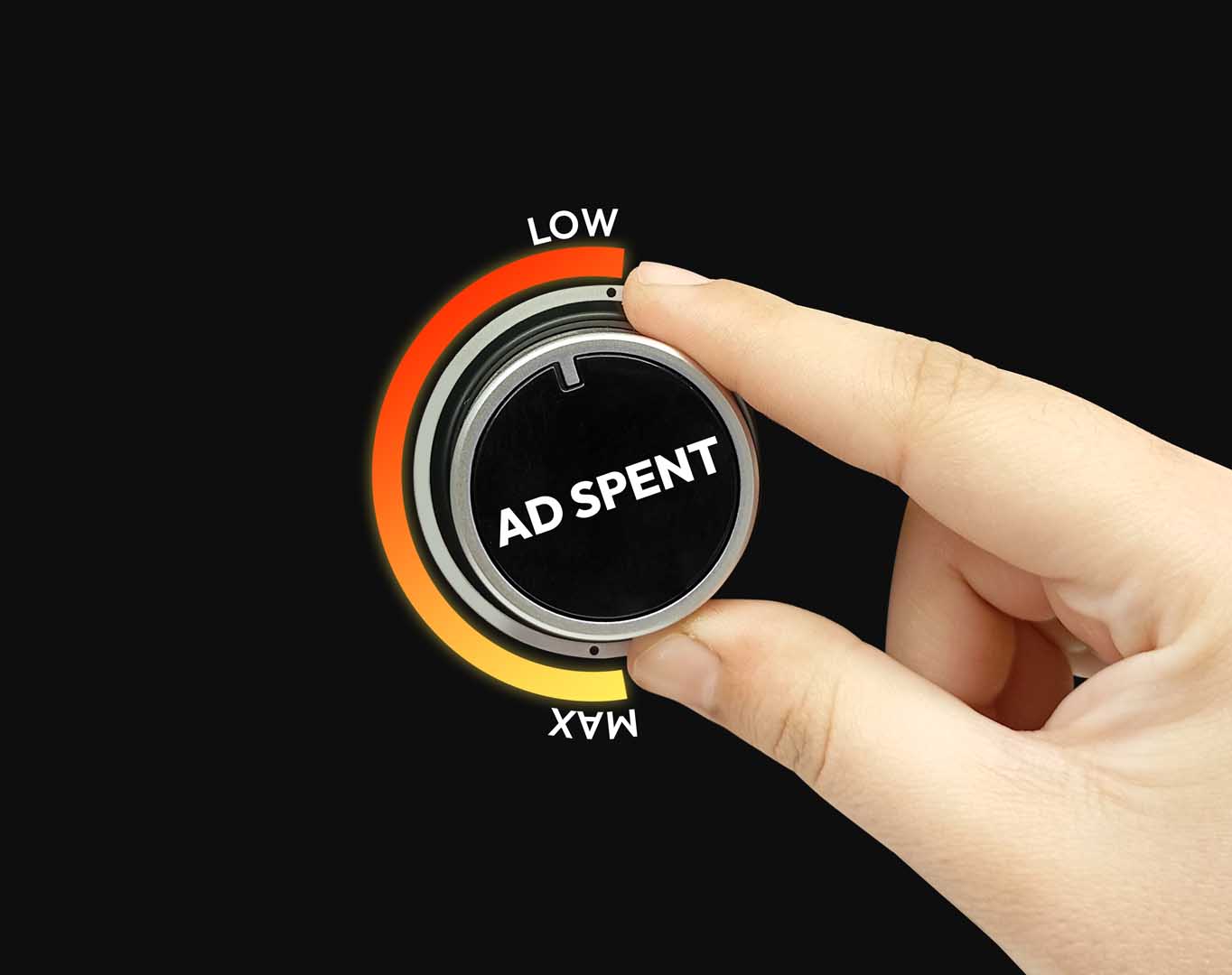
Increasing your Google Ads budget can be a great way to generate more leads, but spending more money doesn’t automatically mean getting better results.
Before increasing your budget, it’s important to understand whether your campaigns are already performing well and whether there is enough opportunity to justify spending more.
The right time to increase your Google Ads budget is usually when your campaigns are generating results, there is additional demand you can capture, and your business is prepared to handle more leads.
Your Campaign Is Already Performing Well
One of the clearest signs that it may be time to increase your budget is consistent performance.
If your campaigns are generating qualified leads at a cost that makes sense for your business, increasing the budget can give Google more room to find additional opportunities.
For example, if you’re consistently generating leads at a cost your business can support, but your campaigns are limited by budget, there may be an opportunity to increase spending.
However, if your campaign is generating expensive or low-quality leads, adding more money isn’t necessarily the answer. You may need to improve the campaign first.
You’re Losing Opportunities Because of Your Budget
A campaign can perform well while still being limited by its budget.
If your ads are regularly reaching the end of their daily budget and there are still relevant searches taking place, you may be missing opportunities to get in front of potential customers.
This doesn’t mean every campaign that spends its full daily budget needs more money. It’s important to look at the bigger picture, including search demand, impression share, lead quality, and conversion performance.
The question is whether additional budget could realistically produce additional valuable leads.
You Have Room to Take on More Business
Marketing and operations need to work together.
If your business is already struggling to keep up with incoming leads, increasing your Google Ads budget may not be the best next step.
On the other hand, if your team has the capacity to take on more customers and you’re looking to grow, additional advertising spend may make sense.
Before increasing your budget, consider whether you have enough staff, inventory, appointment availability, or production capacity to support the additional demand.
There’s little benefit in generating more leads if your business doesn’t have the ability to respond to them.
Your Conversion Tracking Is Reliable
You should know what you’re actually getting from your Google Ads before you spend more.
That means making sure important conversions are being tracked accurately.
Depending on your business, conversions might include phone calls, form submissions, appointment requests, purchases, or other meaningful actions.
If tracking isn’t set up correctly, you may think a campaign is performing well when it isn’t, or you may fail to recognize a campaign that is actually generating valuable opportunities.
Reliable tracking gives you a much stronger foundation for making budget decisions.
You’re Attracting the Right Kind of Leads
Lead volume doesn’t tell the whole story.
Suppose one campaign generates 30 leads, but most of them are outside your service area or looking for services you don’t provide. Another campaign generates 15 leads, and 10 of those become legitimate sales opportunities.
The second campaign may be much more valuable.
Before increasing your budget, look at the quality of the leads you’re receiving. Are they looking for your services? Are they in your target area? Are they a good fit for your typical customer? Are they actually becoming customers?
If the answer is yes, that’s a much stronger reason to consider increasing spend.
You’ve Given the Campaign Enough Time to Evaluate
It can be tempting to make budget changes every few days based on the latest results.
But short-term fluctuations don’t always tell you much.
Search volume, competition, seasonality, and other factors can cause performance to change from one day or week to the next.
It’s generally more useful to look for consistent trends rather than making major decisions based on a small amount of data.
This doesn’t mean you should ignore a serious problem. If you’re seeing clearly irrelevant searches or spending without meaningful conversions, those issues should be addressed promptly.
But when performance is healthy, give the campaign enough time to establish a reliable pattern before making major changes.
You’ve Optimized the Campaign First
Increasing your budget shouldn’t be a substitute for improving the campaign.
Before spending more, look at the areas that could be limiting performance.
Are you targeting the right searches? Are irrelevant search terms being excluded? Are your ads relevant to the keywords you’re targeting? Does the landing page match the ad? Are conversions being tracked properly?
Sometimes improving the campaign can produce better results without increasing the budget.
Once those fundamentals are in place, additional budget may have a much better chance of producing incremental results.
Increase Your Budget Strategically
When the time is right, increasing your budget doesn’t have to mean making a dramatic jump overnight.
A gradual increase can give you an opportunity to monitor how performance changes as more budget becomes available.
Keep an eye on cost per lead, conversion volume, lead quality, search terms, and ultimately how those leads move through your sales process.
If performance remains strong, you may have room to continue scaling.
If costs increase significantly or lead quality declines, it may be a sign that you’ve reached the point where additional spending isn’t producing the same return.
Budget Should Follow Opportunity
The goal of Google Ads isn’t to spend as much as possible. It’s to put your advertising budget toward opportunities that can generate meaningful business results.
Before increasing your budget, ask yourself:
Are our campaigns working? Are we getting the right leads? Is there additional demand we can capture? And can our business handle the growth?
If the answer to those questions is yes, increasing your Google Ads budget may be a smart next step.
If not, your money may be better spent improving the campaign first. At SC Digital, we look at campaign performance, lead quality, conversion data, and business goals together to determine where additional advertising investment can make the most sense.