1 by 1 pix

What is “hosting” and domain? What’s the difference?

Mar 8, 2023 | Knowledge, Web Hosting and Support

Partner for Effective Website Solutions

What is “hosting” and domain? What’s the difference?

When it comes to managing a website, there are many technical terms and concepts that can be confusing. One of the most important concepts to understand is domain names, posting, and DNS records.

In this post, we’ll break down the basics of these concepts and how they fit together.

Domain Names

A domain name is a unique name that identifies a website on the internet. It typically consists of two parts: the name and the top-level domain (TLD). For example, in the domain name “google.com,” “google” is the name, and “.com” is the TLD.
Domain names are used to help people find and remember websites. When you type a domain name into a web browser, the browser looks up the IP address associated with that domain name and connects you to the website.
Domain names can be registered through a domain name registrar, such as GoDaddy or Namecheap. When you register a domain name, you are essentially renting it for a period of time (usually one to ten years). You can renew the registration when it expires to keep the domain name.
This is an image with a number of the top-level domains (TLD).

Hosting and DNS Records

Once you have a domain name, you need a place to host your website. Hosting is the process of storing and serving the files that make up your website. There are many web hosting providers available, and the type of hosting you choose will depend on your needs and budget.
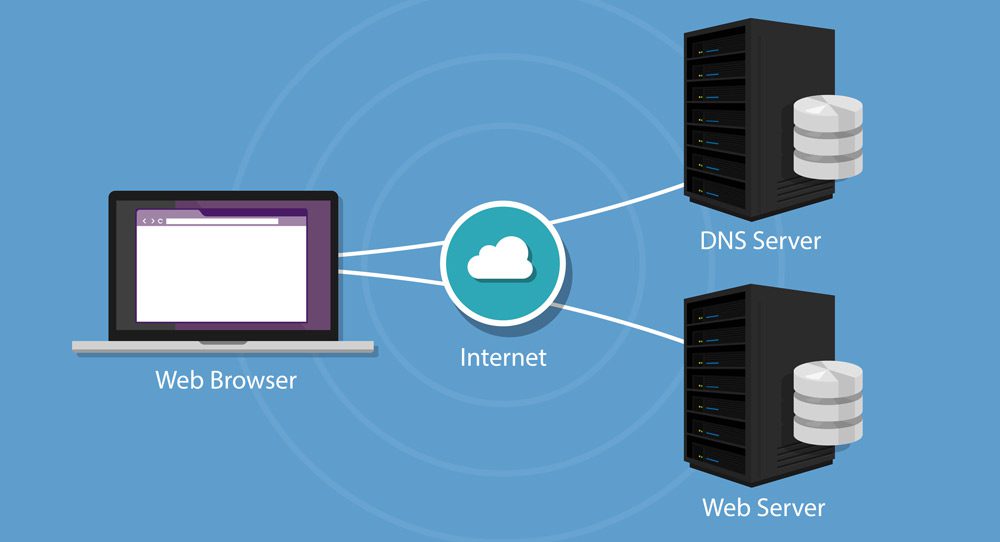
DNS records are used to connect your domain name to your hosting provider. DNS stands for Domain Name System, and it is a system that translates domain names into IP addresses. When you type a domain name into a web browser, the browser sends a request to a DNS server to find the IP address associated with that domain name. The DNS server returns the IP address, and the browser uses that IP address to connect to the website.
This is an image demonstrating how the data is transferred over internet through DNS server and Web Server.

DNS records are used to tell the DNS server where to find your website’s files. There are several types of DNS records, including:

A Record

An A record is used to map a domain name to an IP address. For example, if your hosting provider’s IP address is 123.456.789.10, you would create an A record that points your domain name to that IP address. This allows visitors to connect to your website by typing your domain name into a web browser.

NS Record

NS stands for Name Server. An NS record is used to tell the DNS server which server is responsible for managing your domain name. When you register a domain name, your domain name registrar will typically provide you with the names of two or more DNS servers. You will create an NS record for your domain name that points to these DNS servers.

MX Record

MX stands for Mail Exchange. An MX record is used to tell the DNS server which server is responsible for handling email for your domain name. This is important if you want to use a custom email address with your domain name, such as “[email protected].” You will create an MX record that points to the server that will handle your email.

CNAME Record

CNAME stands for Canonical Name. A CNAME record is used to create an alias for your domain name. For example, if you have a subdomain called “blog.yourdomain.com,” you can create a CNAME record that points that subdomain to the IP address of your hosting provider.

Conclusion

Managing a website requires an understanding of domain names, hosting, and DNS records. Domain names are used to identify your website on the internet, while hosting is used to store and serve your website’s files. DNS records are used to connect your domain name to your hosting provider, and there are several types of DNS records that you may need to create, including A records, NS records, MX records, and CNAME records.

It’s important to keep in mind that DNS records can take time to propagate, which means that it may take some time for changes to take effect. This is because DNS servers around the world need to update their records with the new information. Typically, DNS propagation can take anywhere from a few minutes to a few hours, but in some cases, it can take up to 48 hours.

If you’re managing your website and DNS records, it’s important to keep track of your logins and passwords. You’ll need to log in to your domain name registrar and your hosting provider to make changes to your DNS records, update your website, and manage your hosting account.

In addition to managing DNS records, you’ll also need to keep your website updated and secure. This involves regularly updating your website’s software, plugins, and themes to ensure that they are up to date and secure. You’ll also need to monitor your website for security issues and take steps to protect it from hacking attempts and other threats.

Get Your No-Cost Digital Success Blueprint

"*" indicates required fields

This field is for validation purposes and should be left unchanged.
This field is hidden when viewing the form

Recent Blogs

Why Google Reviews Matter for Google Local Services

If you’re running Google Local Services Ads (LSAs), your reviews are one of the most important ranking factors. At SC Digital, we’ve seen firsthand how a strong review strategy can significantly impact visibility, lead volume, and trust. How Google Local Services Work...

Debunking Common Digital Marketing Myths

Digital marketing is full of misconceptions, and for many businesses, these myths lead to poor decisions, wasted budget, and missed opportunities. At SC Digital, part of our role is helping clients cut through the noise and focus on what actually works. Myth #1: “More...

What is Google Search Console

Many businesses invest in SEO without fully understanding how their website is actually performing in search. At SC Digital, one of the tools we use to bridge that gap is Google Search Console. What Google Search Console Actually Does Google Search Console provides...

Using Lead Magnets in Social Media Advertising

At SC Digital, one of the biggest gaps we see in social media advertising isn’t ad creative or budget, it’s the offer. Too many businesses run ads that ask users to “Contact Us” or “Learn More” without giving them a compelling reason to take action. That’s where lead...

How Website Speed Impacts Leads (and How SC Digital Fixes It)

When businesses think about website performance, they often focus on design or content. But one of the most critical and overlooked factors is speed. At SC Digital, we’ve seen firsthand how even small improvements in load time can lead to measurable increases in...

AI Is Becoming a New Search Experience

Platforms such as ChatGPT are fundamentally changing how users find information. Instead of searching “best digital marketing agency near me” and clicking through websites, users now ask conversational questions like: “Who are the best marketing agencies for small...

How Call Handling Impacts Marketing ROI

Many businesses focus heavily on improving their marketing performance. They invest in advertising, SEO, website design, and lead generation strategies designed to drive more inquiries. But one critical factor is often overlooked: what happens when the phone actually...

The Hidden Cost of Cheap Marketing

Every business wants to save money where it can. Marketing budgets are often one of the first areas owners try to minimize, especially when freelancers, automated tools, and low-cost providers promise quick results at a fraction of the price. On the surface, cheap...

Marketing During Busy Season vs Slow Season

Many businesses naturally adjust their marketing efforts based on how busy they feel. When schedules fill up, marketing is often paused to save money. When work slows down, advertising suddenly becomes urgent again. While this approach feels logical, it often creates...

Categories