
1 by 1 pix

Be a Strategic Hater: Master Negative Keywords in Google Ads

Jun 24, 2025 | Google Ads Knowledge, Knowledge

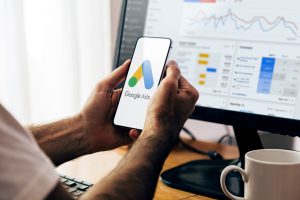
Person holding a smartphone with Google Ads displayed on the screen, sitting at a desk with a laptop and notebook.

How To Use Negative Keywords Improve Google Ads Performance

We’ve all heard it: Stay positive. Look on the bright side. Don’t be negative.

Well, toss that advice out the window—because when it comes to Google Ads, strategic negativity is exactly what you need.

If you’re not using negative keywords, your ads could be burning through your budget faster than a toddler in a candy store with your credit card. Let’s break down why “being negative” is a smart move for your ad campaigns.

What Are Negative Keywords?

In simple terms, negative keywords tell Google:

“If someone searches for this, don’t show my ad.”

Think of it as politely declining to talk to people who aren’t looking for what you offer.

When Being “Negative” Pays Off

Let’s say you’re running ads for an HVAC contractor who installs central air systems—but not ductless mini splits. If you’re showing up for terms like “mini split unit” or “ductless AC near me,” you’re paying for clicks from people who don’t want what you offer.

You’re essentially yelling “We sell tacos!” to people looking for sushi. 

This is where negativity shines.

The “Ductless Drama” Example

In a recent discovery call, we reviewed a potential client’s Google Ads account and found these search terms:

  • “ductless air conditioner where to buy”
  • “mini split unit”
  • “ductless heat pump”

Since the client doesn’t offer ductless systems, we added “ductless” and “mini split” as negative keywords—at the campaign level, to stop the budget drain. Later, we added even more precision with exact match terms like “heat pump” and “ductless ac,” so no budget is wasted.

What If You Do Offer That Service?

Great point—and a common pitfall. If you do want to advertise for ductless or heat pumps, that should have its own dedicated campaign, budget, and landing page.

This level of organization is part of every SC Digital Google Ads audit and strategy session.

How to Use Negative Keywords Effectively

Here’s how to keep your budget safe:

  1. Review search terms regularly. See what people actually search for when they click your ads.
  2. Think in themes. If you don’t offer “repair,” “DIY,” “cheap,” or “free,” add them as negatives.
  3. Apply negatives at the right level. Use ad group, campaign, or account-level negatives as needed.
  4. Be selective. Not every click is a good click—protect your budget like your Netflix password.

Smart Negativity = Better Results

Being “negative” in your Google Ads doesn’t mean you’re pessimistic—it means you’re smart and strategic.

Don’t chase more traffic. Go after the right traffic.

Ready to stop wasting ad spend?

Book your free Google Ads audit today and see where you can save.

Get Your No-Cost Digital Success Blueprint

"*" indicates required fields

This field is for validation purposes and should be left unchanged.
This field is hidden when viewing the form

Recent Blogs

Google Business Profile vs. Website: Which Drives More Leads?

When it comes to generating leads online, many businesses ask the same question: should you focus on your website or your Google Business Profile (GBP)? The answer isn’t as simple as choosing one over the other. Both play a critical role—but they work in very...

7 Website Mistakes That Are Costing You Leads

Your website should be your most powerful lead generation tool, but for many businesses, it ends up doing the opposite. You might be getting traffic, but if visitors aren’t converting into calls, form fills, or inquiries, something isn’t working. Here are seven of the...

How to Use Negative Keywords to Save Money and Improve Results

If you’re running Google Ads and not using negative keywords, there’s a good chance you’re wasting money. Negative keywords are one of the simplest, and most overlooked ways to improve your campaign performance. They help prevent your ads from showing up for...

The Biggest Digital Marketing Trends to Watch in 2026

Digital marketing continues to evolve at a rapid pace, and 2026 is shaping up to be another major shift in how businesses attract and convert customers online. From AI-driven search experiences to changing user behavior, staying ahead of these trends is becoming...

How to Repurpose Content Across Multiple Channels

Creating high-quality content takes time, whether it’s a blog post, video, case study, or guide. The good news is you don’t need to create something new for every platform. With the right strategy, a single piece of content can be repurposed across multiple channels...

What Is a Meta Description and Why It Matters for SEO

When it comes to SEO, most businesses focus on keywords, rankings, and content, but there’s one small element that often gets overlooked: the meta description. Even though it’s short and doesn’t directly influence rankings, the meta description plays a major role in...

Blogging for Business: Is It Still Worth It in 2026?

With the rise of AI-generated content, social media dominance, and evolving search engines, many businesses are asking the same question in 2026: is blogging still worth it? The short answer is yes, but not in the way it used to be. Blogging hasn’t disappeared. It has...

The Biggest GBP Mistakes That Hurt Your Visibility

Your Google Business Profile (GBP) is one of the most powerful tools for local visibility, but it’s also one of the most commonly mismanaged. Many businesses assume that simply claiming their profile is enough. In reality, small mistakes can significantly limit your...

Forms vs. Calls vs. Chat: How to Determine What Converts Best

A common question that comes up in digital marketing is: “What’s the best way to capture leads on my website?” The answer isn’t one-size-fits-all. It depends on your industry, your audience, and how your customers prefer to engage. Why Lead Capture Strategy Matters...

Categories